
Vietnam sits in one of the world’s most dynamic regions, where trade flows are heavily concentrated. According to a World Bank report published in 2023, Vietnam ranked 43rd on the Logistics Performance Index (LPI), among the top five in ASEAN behind Singapore, Malaysia and Thailand, and level with the Philippines.
At the Asia-Pacific regional annual meeting of the International Federation of Freight Forwarders Associations (FIATA), which opened on 14 July in Da Nang, Deputy Minister of Industry and Trade Nguyen Sinh Nhat Tan said Vietnam is becoming an attractive destination for logistics activity in the Asia-Pacific region.
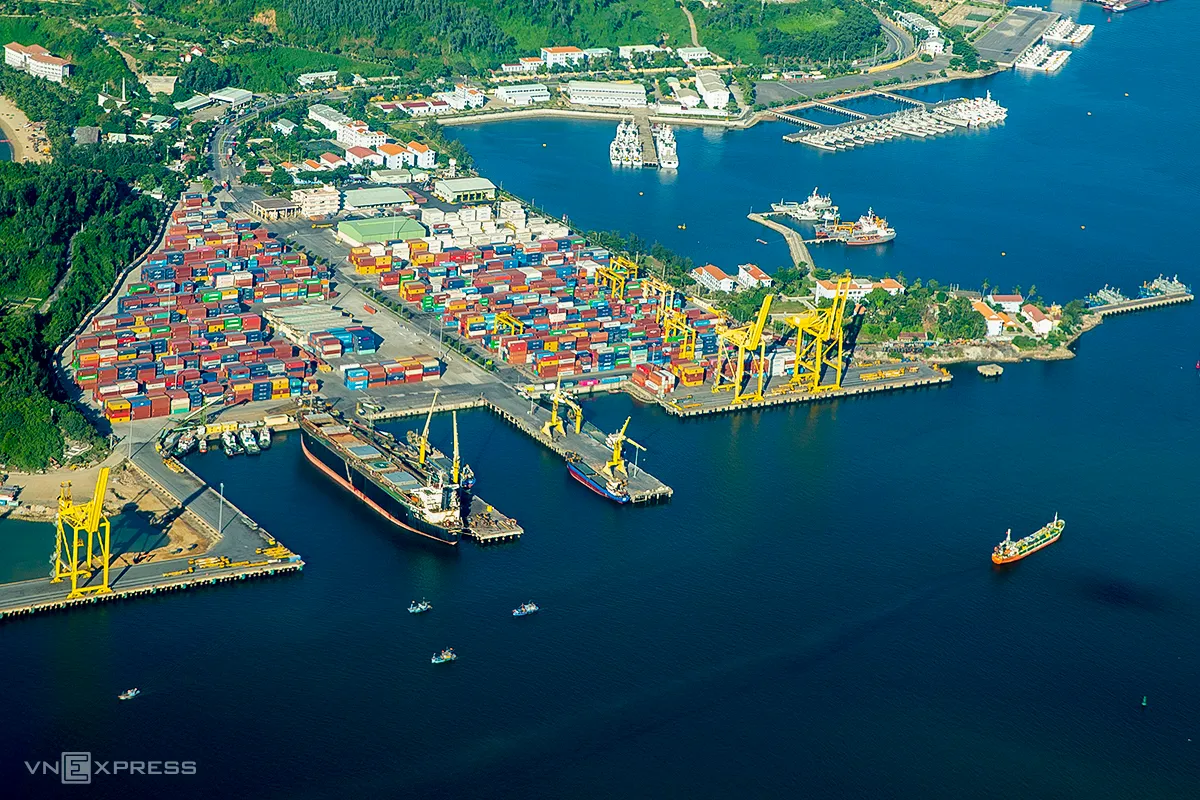
(Cargo gathered at Tien Sa port, Da Nang. Photo: Nguyen Dong)
Vietnam’s logistics market has grown by an average of 14–16% a year, taking the country’s total import and export turnover to USD 730.2 billion in 2022, up 9.1% on the same period in 2021. “Logistics services do not only contribute significantly to Vietnam’s economic development; they also build an efficient transport network that connects domestic trade to international markets,” the Deputy Minister added.
Speaking on the sidelines of the conference to VnExpress, however, Le Duy Hiep, Chairman of the Vietnam Logistics Business Association (VLA), said the real difficulty is that Vietnam has too many seaports, and “almost every province with a coastline has one”.
“That is the point we raise in every working session with the provinces,” Mr Hiep said. In his view, rather than opening seaports, provinces should be building regional links and connections — regions here meaning key economic zones that are related to one another, geographically close, sharing cargo and customers and facing similar needs.
Trinh Quang Tuan, Deputy Head of the Planning and Market Department at Saigon Port JSC, took the same view: many coastal provinces and cities opening seaports at once has scattered both import-export cargo and investment. “If every coastal province wants a seaport and an airport, it all becomes very scattered, and the users of the service scatter with it,” he said.

(Trinh Quang Tuan presenting at the conference. Photo: Nguyen Dong)
In Mr Tuan’s view, port building should be concentrated in a few locations to form key national seaports, rather than spread “thinly and piecemeal, which is bad for state management and for investor returns”. Port consultants and the government have now surveyed more than 3,000 km of coastline, so he hopes suitable port locations will be chosen soon.
The country already has several large seaports: Hai Phong in the north; Da Nang and Van Phong (Khanh Hoa) in the centre; and Cai Mep – Thi Vai in the south-east, covering Can Gio in Ho Chi Minh City and Ba Ria Vung Tau. Both Mr Hiep and Mr Tuan see Cai Mep – Thi Vai as the model of regional connection: Ba Ria Vung Tau has the port, but much of the cargo comes from Ho Chi Minh City, Binh Duong and Dong Nai.
Mr Tuan proposed that the government plan Hai Phong and Cai Mep – Can Gio as key national seaports. “Investors may later propose better locations with their own long view, but these two ports are already relatively formed and could be considered for investment, in the interest of the whole country,” he said.
The VLA chairman argued that regional and provincial planning must be harmonised, each using the other’s ecosystem to cut costs, and must drop the instinct that “cargo has to go through our own province’s port”. “Send it wherever is convenient and cheapest. That is also how we can compete with neighbouring countries,” Mr Hiep added.
Source: vnexpress.net